Your gut wakes up before you do
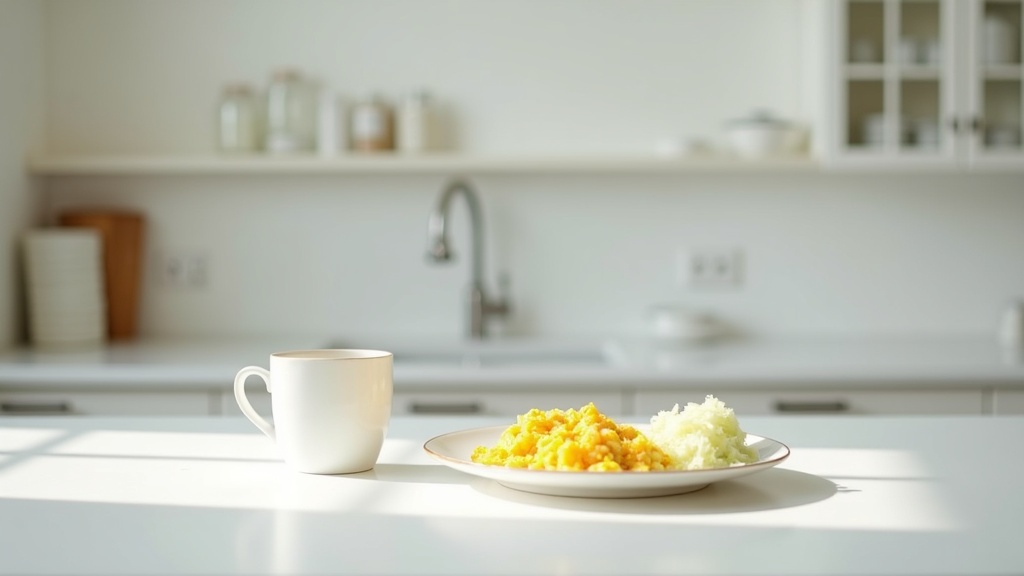
You have a morning system. Coffee at a certain time. Training, maybe. Inbox by a certain hour. Most of us have spent years refining the productive part of our mornings.
Almost nobody thinks about the fact that their gut bacteria are also running a schedule.
Your microbiome operates on a circadian rhythm. Bacterial populations shift composition throughout the day, driven by when you eat, what you eat, and how long you’ve fasted overnight. That first meal isn’t just fuel for your brain and muscles. It’s the signal that kicks your gut’s daytime crew into gear.
Understanding this doesn’t require overhauling your life. It requires knowing enough about the system to make consistently good calls with whatever’s in front of you.
Your gut runs a clock
Research published in Frontiers in Microbiology (2025) mapped the molecular crosstalk between gut bacteria and the body’s circadian machinery. The finding: your host circadian clock actively shapes which microbial species dominate at different times of day. Feeding and fasting cycles, hormone secretion (cortisol, melatonin), bile acid production, and immune responses all fluctuate rhythmically, creating a shifting landscape in the gut that favours different bacterial communities at different hours.
This isn’t background noise. A 2025 review in Gastroenterology confirmed that GI functions including digestion, absorption, motility, barrier integrity, and immune response all follow circadian patterns. The clinical observation that most people have a bowel movement in the morning after waking isn’t random. It’s your gut’s clock doing what it’s designed to do.
A separate 2025 review in Current Nutrition Reports examined chrononutrition (the study of how meal timing interacts with circadian biology) and found that irregular eating patterns, late meals, and what researchers call “social jet lag” disrupt microbial rhythms, reduce short-chain fatty acid (SCFA) production, and compromise gut barrier integrity. Early time-restricted feeding, eating aligned with your natural circadian window, consistently improved microbial diversity and metabolic outcomes compared to erratic schedules.
The practical takeaway: not just what you eat, but when you eat it, determines how well your gut ecosystem functions.

What the overnight fast actually does
While you sleep, your gut isn’t idle. It’s running maintenance. The migrating motor complex (a pattern of muscular contractions) sweeps residual food particles and bacteria through the small intestine. Your gut lining undergoes repair. Antimicrobial peptides are secreted in rhythmic waves. The microbial “cleaning crew” does its work during this window.
Research from the Frontiers in Microbiology review describes this as the host’s circadian system creating a dynamic environment in the gut lumen, rhythmically favouring species that can best utilise available resources at specific times. Overnight, that means clearing, repairing, and resetting.
A 12 to 14 hour overnight fast supports this process. Not because fasting is a trend, but because it aligns with the biological maintenance window your gut already runs. Cutting that window short with a late-night meal or early-morning snack interrupts the cycle before it completes.
When you break that fast, you’re not just eating breakfast. You’re signalling the transition from maintenance mode to production mode. The composition of that signal matters.
Five principles for a good first meal
These aren’t rules. They’re principles grounded in how the system works. Apply them to whatever your morning actually looks like.
Fibre early
Your gut bacteria ferment dietary fibre into short-chain fatty acids (SCFAs), including butyrate, which feeds the cells lining your colon and supports barrier integrity. SCFA production is circadian-dependent. Providing fibre when your gut is primed for fermentation (morning through midday) supports the cycle rather than fighting it. This doesn’t mean a complicated meal. Vegetables with eggs. Oats with nuts. A handful of seeds on yoghurt. The bar is lower than most people think.
Something fermented
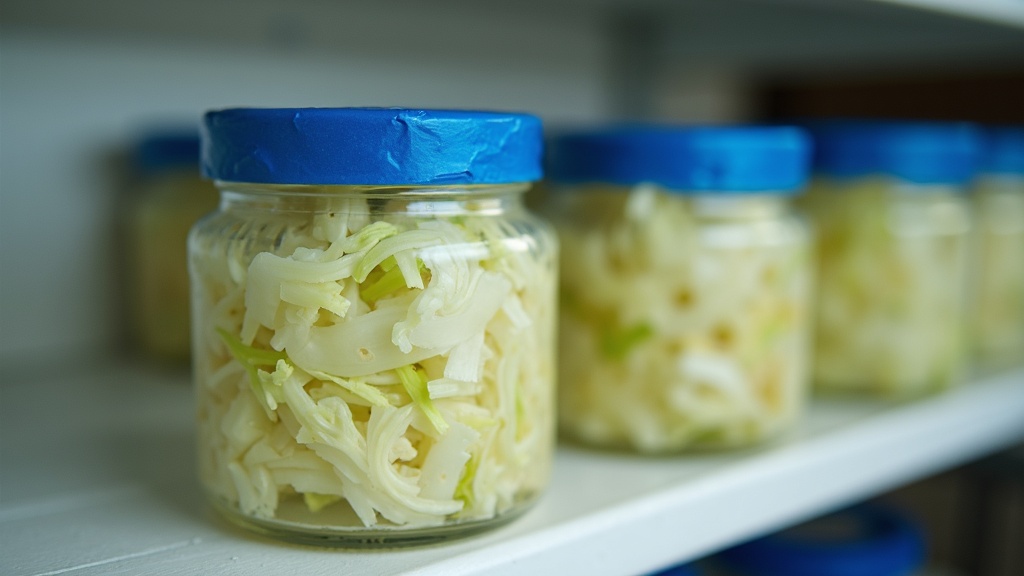
A Stanford study published in Cell (Wastyk et al., 2021) showed that regular fermented food intake reduced blood inflammation markers by roughly 25% over a month. Five portions daily was the study protocol, but even one or two servings makes a measurable difference to microbial diversity. A spoonful of sauerkraut alongside your eggs. Full-fat yoghurt with breakfast. Kimchi on the side. If you’re making your own fermented cabbage (and if you’ve read our piece on what actually happens when you ferment cabbage, you know how simple that is), your morning addition is already sitting in the fridge.
Polyphenols
Bitter compounds from plants act as fuel for beneficial gut bacteria. Coffee qualifies. So does extra virgin olive oil, dark chocolate, and berries. The polyphenol content in two to five cups of coffee daily has been associated with reduced cardiovascular risk and improved microbial diversity. If you’re already drinking coffee in the morning, you’re already doing this. Pair it with food rather than drinking it on a completely empty stomach, and you’re working with the system rather than just stimulating it.
Fat with your fibre
Many bioactive compounds in food are fat-soluble. Curcumin from turmeric, the carotenoids in coloured vegetables, polyphenols from olive oil. Without fat present, absorption drops significantly. This is one reason why fat-free breakfasts built around juice and cereal miss the mark nutritionally. A drizzle of olive oil on vegetables. Eggs cooked in butter. Nuts and seeds on yoghurt. The fat isn’t a guilty addition. It’s what makes the rest of the meal work properly.
Skip the ultra-processed default
The standard weekday breakfast in most households (cereal, toast, juice, flavoured yoghurt) delivers a concentrated hit of refined carbohydrate and added sugar with minimal fibre and almost no microbial benefit. Research consistently shows that high-sugar, low-fibre diets flatten microbial oscillations and reduce SCFA production. You don’t need to eliminate anything. You need to notice what the default is, and decide whether it’s actually serving you. Often, the fix is as simple as swapping the cereal for eggs, adding a fermented side, and keeping the coffee.
What this looks like in practice
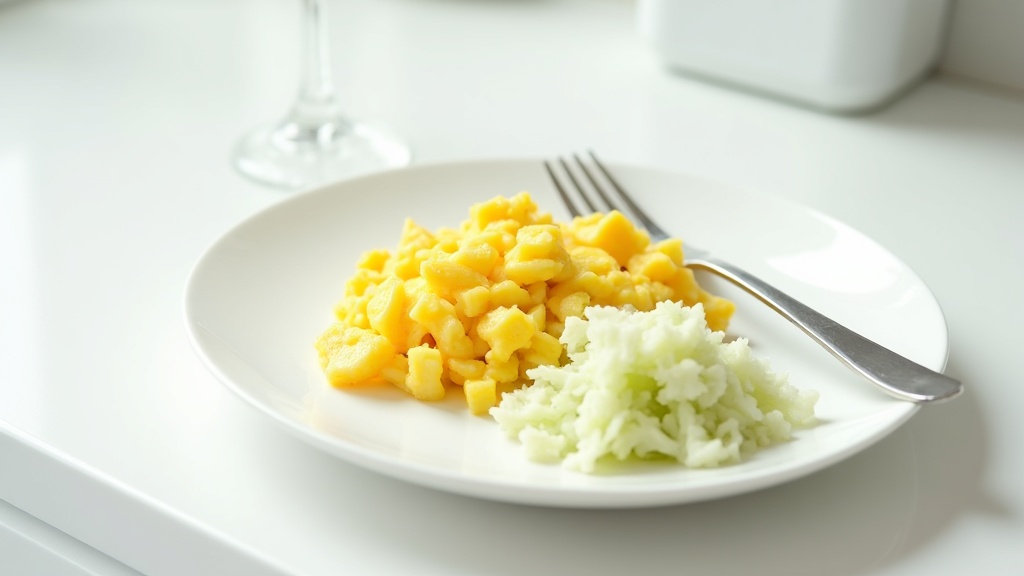
You train early and eat at 7:30am. Eggs scrambled with whatever vegetables are in the fridge. A spoonful of sauerkraut or kimchi on the side. Coffee. You’ve hit fibre, fermented food, polyphenols, and fat in under ten minutes of cooking.
You skip breakfast and don’t eat until noon. That’s fine. Your overnight fast is longer, which supports the maintenance window. When you do eat, make that first meal count by applying the same principles. The timing of the meal matters less than what you do with it.
You’re travelling or eating out. Full-fat yoghurt from a hotel buffet. Eggs and vegetables if they’re available. Coffee. You’re not going to find house-made sauerkraut at a Holiday Inn, and that’s alright. Hit three of the five principles and move on. Consistency over perfection, every time.
You had a late dinner and a few wines. Your overnight fast was shorter. Your gut had less maintenance time. Don’t compound it with a sugar-heavy breakfast. Keep the first meal simple, fibre-forward, and easy to digest. Your gut is catching up, not starting fresh.
The system, not the protocol
The point of understanding circadian gut biology isn’t to add another rigid routine to your morning. It’s to give you enough knowledge of the system that you can make good decisions regardless of circumstance.
Your gut bacteria wake up on a schedule. They have preferred fuel at preferred times. The overnight fast runs a maintenance cycle that serves you when you respect its duration. And what you eat first sets the tone for how that ecosystem performs for the rest of the day.
None of this requires special equipment or exotic ingredients. It requires understanding the biology, then working with it instead of accidentally working against it.
If you want to take the fermented food principle further, start with a simple cabbage ferment. Add spices that do more than flavour. And if you want to understand the broader gut-brain connection driving all of this, start with what the research actually says.
References
- Zheng B, Wang L, Sun S, Yuan X, Liang Q. The molecular interplay between the gut microbiome and circadian rhythms: an integrated review. Front Microbiol. 2025;16:1712516. doi:10.3389/fmicb.2025.1712516
- Bishehsari F, Post Z, Swanson G. Circadian Rhythms in Gastroenterology: The Biological Clock’s Impact on Gut Health. Gastroenterology. 2025;169(7):1380-1396. doi:10.1053/j.gastro.2025.06.017
- Bajaj P, Sharma M. Chrononutrition and Gut Health: Exploring the Relationship Between Meal Timing and the Gut Microbiome. Curr Nutr Rep. 2025;14(1):79. doi:10.1007/s13668-025-00670-z
- Wastyk HC, Fragiadakis GK, Perelman D, et al. Gut-microbiota-targeted diets modulate human immune status. Cell. 2021;184(16):4137-4153.e14. doi:10.1016/j.cell.2021.06.019
Old craft. New science. Built for now.

Field Notes Weekly
One Field Note. Every Monday. Mechanism first, no wellness language.