What Actually Happens When You Ferment Cabbage
Most people who make sauerkraut can tell you the steps. Shred, salt, press, wait. What they can’t always tell you is what’s actually happening inside the jar, and why it matters for more than preservation.
This is that explanation. Not a recipe. The mechanism.
Salt, water, and the start of something
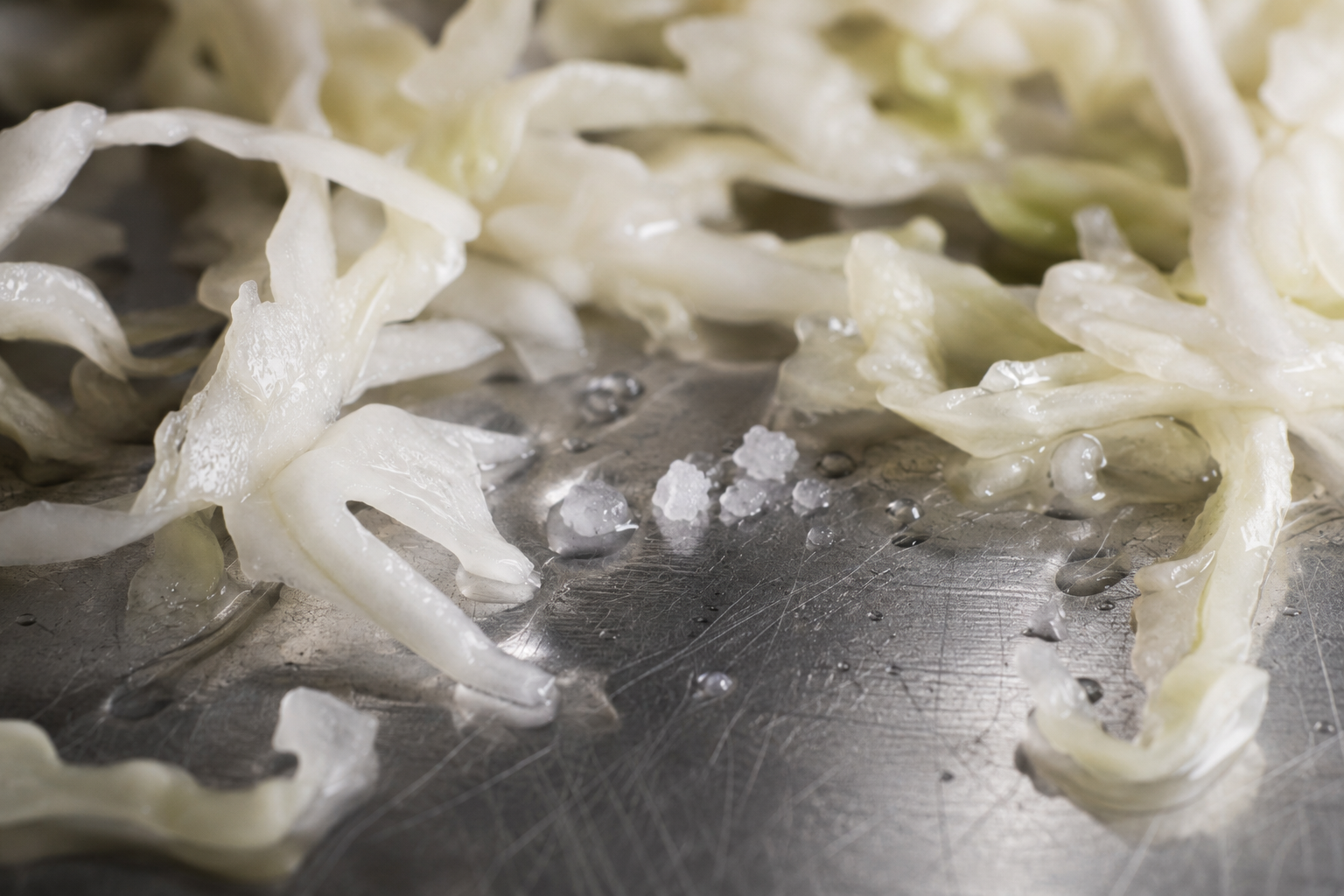
Fermentation begins the moment salt meets cabbage. Salt draws moisture out of the plant cells through osmosis, creating the liquid brine that will become the fermentation environment. This isn’t just a preparation step. It’s the first act of a controlled biological process.
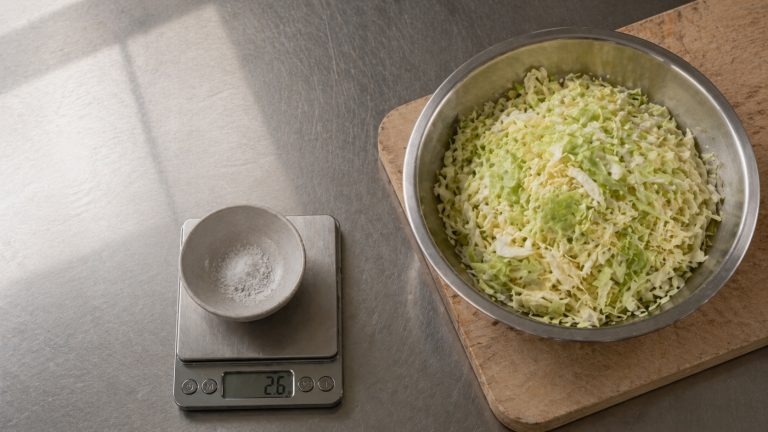
The salt concentration is doing specific work here. At around 2% by weight (20 grams of salt per kilogram of cabbage), you’re creating conditions that suppress harmful bacteria while allowing lactic acid bacteria (LAB) to thrive. These are bacteria that already live on the surface of raw cabbage. You’re not introducing anything. You’re selecting for what’s already there.
Get the salt ratio wrong in either direction and the ferment becomes unpredictable. Too little and spoilage organisms have room to compete. Too much and you slow or halt the bacterial activity you want. Weight your salt. Don’t estimate.
The microbial succession
What happens next is a sequence, not a single event. Research on commercial sauerkraut fermentations has established that at least four primary species of lactic acid bacteria drive the process in successive waves, each one creating conditions that favour the next.
Stage one: Leuconostoc mesenteroides dominates the first phase. It’s present on fresh cabbage at relatively high numbers and has a shorter generation time at typical fermentation temperatures than most other bacteria. It initiates the fermentation quickly, produces carbon dioxide (which helps push out remaining oxygen and creates the anaerobic environment the process requires), and begins producing lactic acid and other organic acids that drop the pH.
Stage two: As lactic acid accumulates and pH falls below approximately 4.5, the environment becomes too acidic for Leuconostoc to dominate. More acid-tolerant species, primarily Lactobacillus plantarum, take over and drive the fermentation to completion. L. plantarum finishes the process, with the final pH reaching approximately 3.5. At this point the environment is stable and preserved.
This succession, with heterofermentative bacteria handing off to homofermentative bacteria. It is consistent across fermentations and produces the characteristic flavour profile and safety of sauerkraut. The quality and safety of the final product depend on this sequence running correctly.
What the bacteria are producing
The bacteria aren’t just changing the pH. They’re transforming the chemical composition of the food itself.
Lactic acid is the primary metabolite: it creates the tang, drives down the pH, and acts as the preservation mechanism. It’s also what makes fermented foods distinctly different from acidified foods like vinegar-pickled vegetables. The acid is produced biologically, not added.
Short-chain fatty acids (SCFAs), primarily acetate, propionate, and butyrate, are produced through bacterial fermentation of dietary fibre and carbohydrates. These compounds have significant downstream effects: they support gut barrier integrity, play roles in glucose homeostasis, and have immune-regulatory functions. Research has consistently linked SCFA production to the health effects associated with a well-functioning gut microbiome.
Ascorbigen, a compound with antioxidant properties, is synthesised during cabbage fermentation as a conversion product of glucobrassicin, a glucosinolate naturally present in the raw vegetable. Studies indicate that fermentation conditions influence the concentration of ascorbigen in the final product, with lower salt concentrations associated with higher yields.
Bacteriocins, antimicrobial peptides produced by Lactobacillus species that inhibit the growth of competing pathogens and spoilage organisms. This is part of the reason properly fermented vegetables are microbiologically stable.
The bacteria are, in effect, pre-processing the food. They’re breaking down structures, synthesising new compounds, and creating a product chemically different from what you started with.
What your gut gets from it
The case for fermented vegetables is two-part: the live organisms themselves, and the compounds they produce.
On the organisms: fermented vegetables typically contain between 100,000 and 10,000,000 lactic acid bacteria per gram. Strains found in sauerkraut, including Lactobacillus plantarum, Lactobacillus brevis, and Leuconostoc mesenteroides, are closely related to organisms studied for probiotic effects. Large-scale genomic analysis has found that LAB from fermented foods do appear in the human gut, with the data suggesting fermented food is a genuine source of LAB for the gut microbiome, though their residence is transient rather than permanent.
On the broader dietary effect: a 10-week randomised trial comparing high-fermented-food diets against high-fibre diets found that the fermented food group showed significantly increased microbiota diversity and decreased markers of inflammation, with 19 inflammatory proteins declining over the course of the study. The researchers specifically noted that fermented foods may be valuable in addressing the decreased microbiome diversity associated with industrialised diets.
A separate pilot study examining six weeks of regular fermented vegetable consumption found increases in Faecalibacterium prausnitzii, a species consistently associated with gut health and reduced inflammatory signalling, alongside a trend toward greater microbiota diversity overall.
The mechanism isn’t mystery. You’re feeding a diverse microbial ecosystem a regular supply of live organisms and the prebiotic fibre from cabbage that supports them. Diversity increases. Inflammatory signalling tends to decrease. The system functions better.
The protocol
Two methods. The traditional approach is worth understanding because it teaches you what the process is doing. The chamber vacuum method is what I use, and for most people with a serious interest in fermentation it becomes the only method they go back to.
Traditional Method (The Baseline)
Ingredients:
– White cabbage: 1kg
– Non-iodised salt: 20g (2% by weight, always weigh, never estimate)
Method:
1. Remove outer leaves. Shred cabbage finely. Greater surface area means more effective salt draw.
2. Combine cabbage and salt in a large bowl. Massage and squeeze firmly for 5–8 minutes until substantial liquid has released. The brine should be pooling visibly in the bowl.
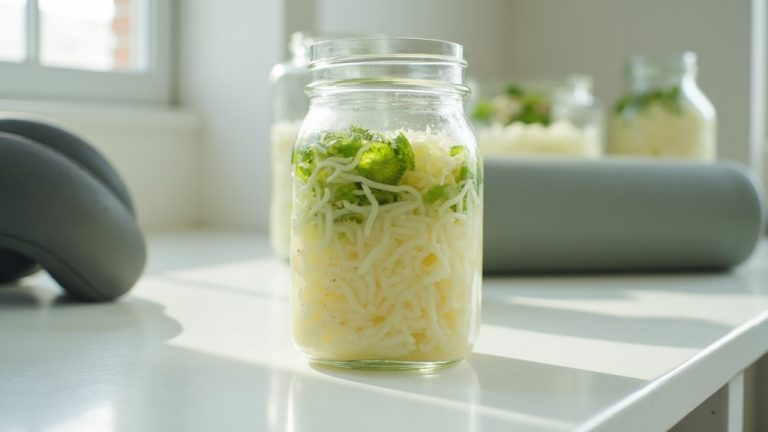
3. Pack tightly into a clean jar, pressing down firmly so brine covers the cabbage completely. Air pockets work against you.
4. Cover loosely so the jar can off-gas CO₂ as fermentation proceeds. Don’t seal it airtight.
5. Leave at room temperature (18–22°C) for a minimum of 5 days. Taste from day 3. Flavour develops from mild and slightly salty toward a cleaner, brighter lactic acid tang.
6. Once the flavour is where you want it, seal and refrigerate. Cold dramatically slows microbial activity and extends shelf life to several months.
What you’re watching for:
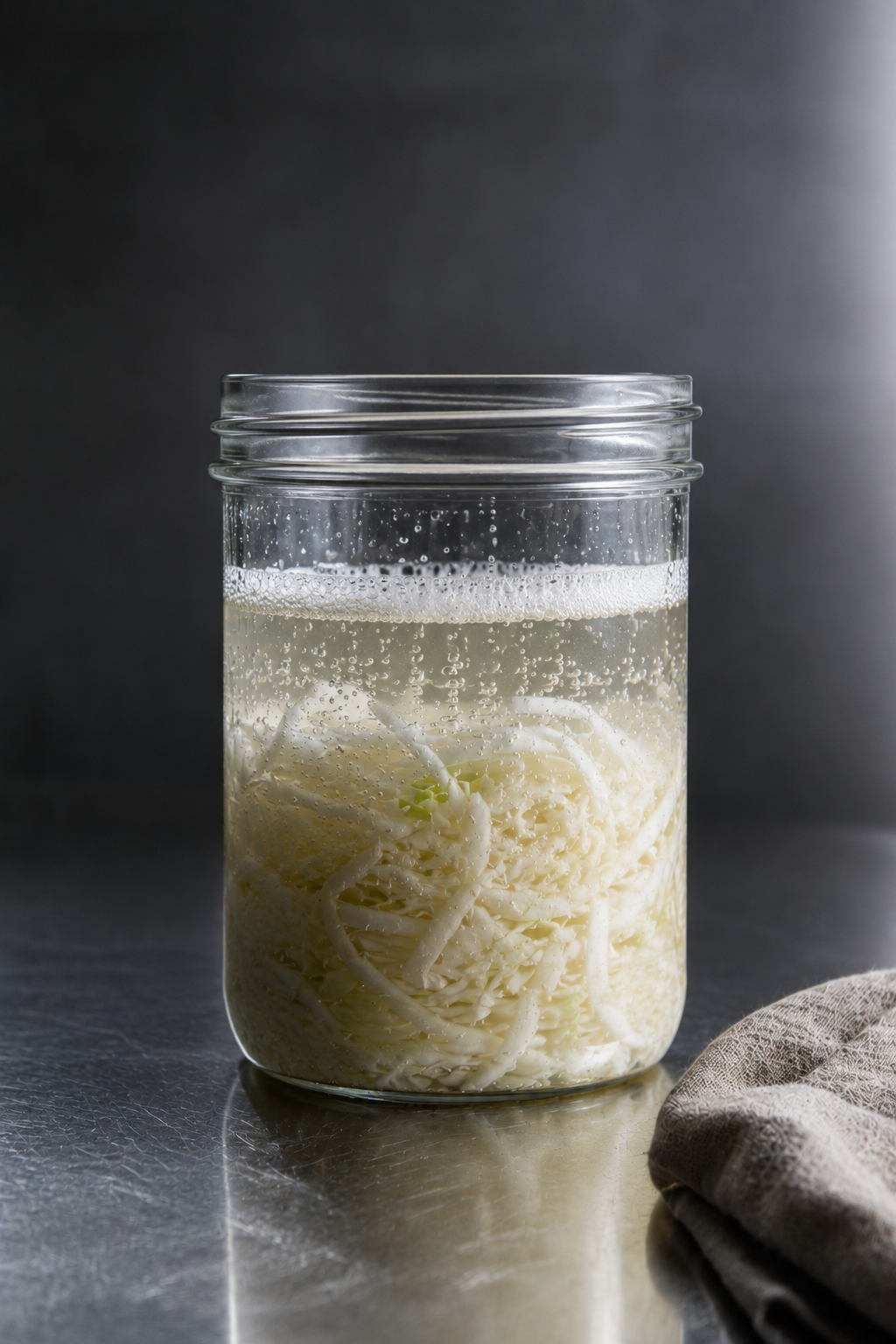
– Bubbling within 24–48 hours: CO₂ from bacterial activity (expected)
– Brine rising: normal, place the jar on a plate
– White sediment at the bottom: normal, dead bacterial cells
– Pink or black discolouration, or a foul (not sour) smell: discard and start again
The traditional method works. It has worked for thousands of years. It also requires 5–7 days of counter space, crocks or weights to keep cabbage submerged, and a tolerance for the fermentation smell permeating your kitchen.
Chamber Vacuum Method (The Better System)
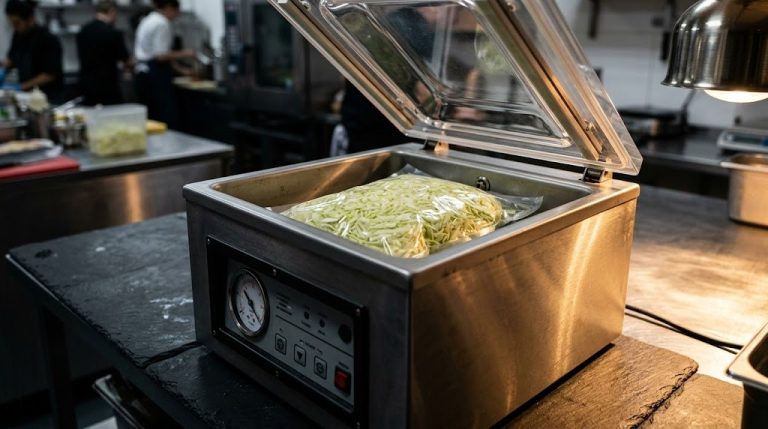
This is where a professional technique translates directly into a home advantage. A chamber vacuum sealer, the same equipment used in commercial kitchens, fundamentally changes the fermentation environment, and the results reflect it.
What the chamber vacuum does: When you seal the bag under vacuum, you remove the oxygen environment entirely from the start. The anaerobic conditions that traditional fermentation spends 24–48 hours establishing are created immediately. The beneficial bacteria aren’t competing with aerobic organisms from the outset. They’re operating in their preferred environment from the moment the bag is sealed.
The pressure cycling in a chamber machine also accelerates brine penetration into the cabbage cell structure. Salt and liquid move into the tissue more rapidly than the osmosis-only process of traditional methods.
The result: fermentation that reaches the same microbial and flavour endpoints in a fraction of the time, in a compact bag that fits in a corner of your refrigerator rather than a crock on your bench.
Equipment:
– Chamber vacuum sealer (a countertop chamber machine, not a suction-style edge sealer)
– Compostable vacuum bags (the preferred option; they perform identically to standard bags and eliminate the plastic waste
Ingredients:
– White cabbage: 1kg, finely shredded
– Non-iodised salt: 20g (2%, weigh it)
Method:
1. Shred cabbage finely and combine with salt in a bowl. Massage for 3–5 minutes until liquid begins releasing.
2. Place cabbage and all liquid into the vacuum bag. You want the brine in the bag. Don’t drain it off.
3. Seal in the chamber vacuum. The vacuum cycle will draw out remaining oxygen and pull the brine through the cabbage structure. The bag will compress tightly around the contents. This is correct.
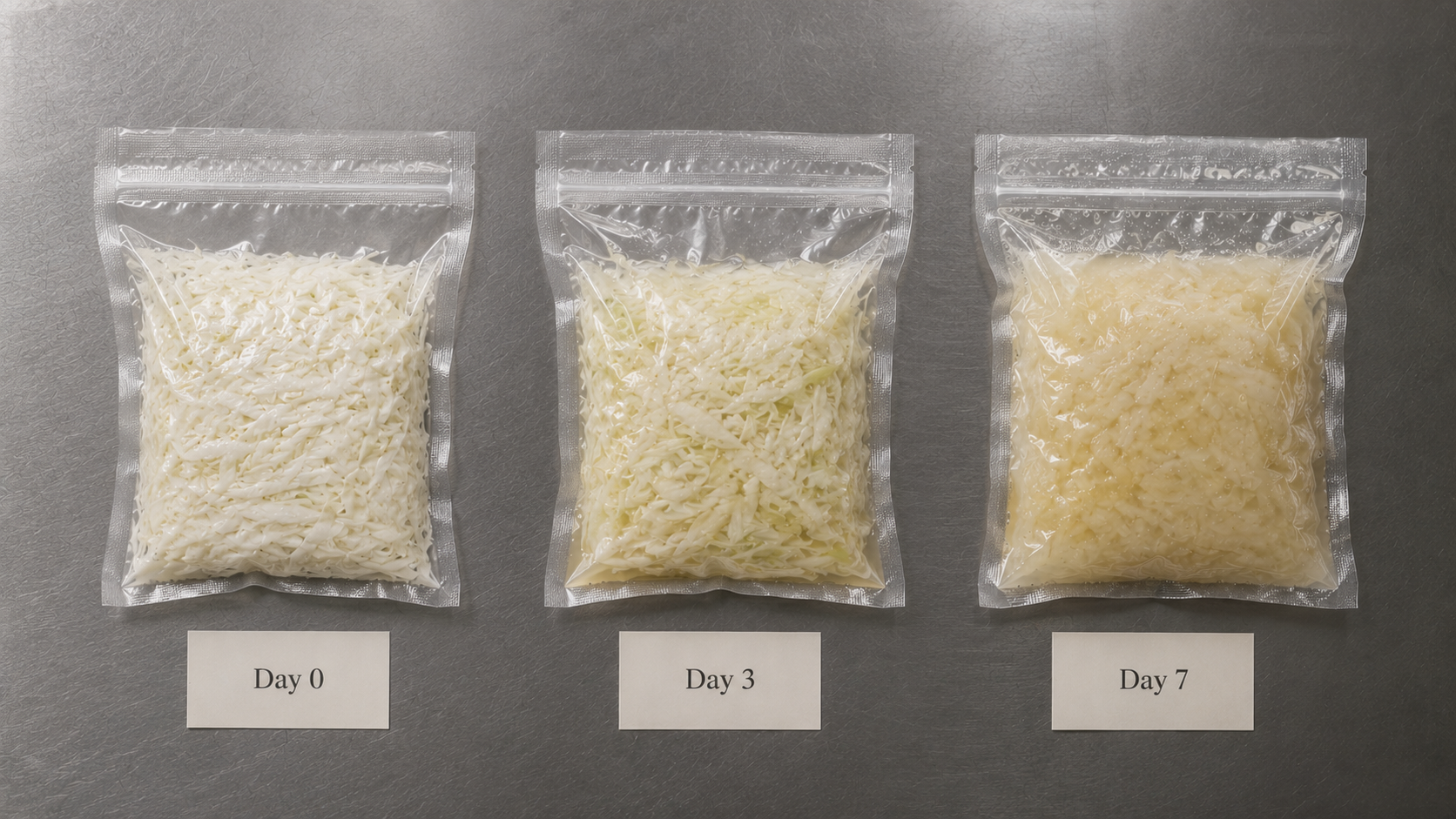
4. Leave at room temperature (18–22°C). The fermentation is already underway. Taste from day 2.
5. Most people find the flavour is where they want it between days 3–5, compared to 5–10 days with the traditional method. Refrigerate when you reach your preferred acidity.
What you’re watching for:
– The bag will inflate slightly as CO₂ is produced. That’s the fermentation working.
– If the bag inflates significantly, you can briefly re-open, release pressure, and reseal.
– A slightly inflated bag in the fridge after day 3 simply means active fermentation. It slows markedly once chilled.
Why this method:
The chamber vacuum approach gives you a controlled, repeatable anaerobic environment, faster results, minimal bench footprint, and a cleaner workflow than crocks and weights when using compostable bags. It’s also scalable: you can run multiple ferments simultaneously in separate bags without them affecting each other.
This is the system we use here. Everything that follows on Green Holmes, the Neutral Base, the tincture applications, the recipe protocols, is built on this foundation.
The point
Fermentation is not complicated. The microorganisms do the work. Your job is to set up conditions that let the right ones dominate. Salt ratio, temperature, and anaerobic environment are the three variables that matter.
The chamber vacuum method doesn’t change the biology. Leuconostoc mesenteroides still initiates the process. Lactobacillus plantarum still finishes it. Lactic acid still drops the pH to preservation territory. What the method changes is the setup time, the footprint, and the repeatability. For people who want to actually integrate fermented food into a real life rather than manage a crock on the bench, those things are not trivial.
What you end up with either way is a food that’s chemically different from what you started with, containing live organisms related to those studied for gut health effects, prebiotic fibre, and bioactive compounds produced during the fermentation process itself.
It’s also genuinely good to eat. That matters too.
▶ References
-
Plengvidhya, V., Breidt, F., Lu, Z., & Fleming, H.P. (2007). DNA Fingerprinting of Lactic Acid Bacteria in Sauerkraut Fermentations. Applied and Environmental Microbiology, 73(23), 7697–7702.
https://doi.org/10.1128/aem.01342-07 -
Lu, Z., Breidt, F., Plengvidhya, V., & Fleming, H.P. (2003). Bacteriophage Ecology in Commercial Sauerkraut Fermentations. Applied and Environmental Microbiology, 69(6), 3192–3202.
https://doi.org/10.1128/aem.69.6.3192-3202.2003 -
Yang, X., Hu, W., Xiu, Z., et al. (2020). Microbial Community Dynamics and Metabolome Changes During Spontaneous Fermentation of Northeast Sauerkraut. Frontiers in Microbiology, 11.
https://doi.org/10.3389/fmicb.2020.01878 -
Martínez-Villaluenga, C., Peñas, E., & Frías, J. (2009). Influence of Fermentation Conditions on Glucosinolates, Ascorbigen, and Ascorbic Acid Content in White Cabbage. Journal of Food Science, 74(1).
https://doi.org/10.1111/j.1750-3841.2008.01017.x -
Rezac, S.D., Kok, C.R., Heermann, M., & Hutkins, R. (2018). Fermented Foods as a Dietary Source of Live Organisms. Frontiers in Microbiology, 9.
https://doi.org/10.3389/fmicb.2018.01785 -
Pasolli, E., De Filippis, F., Mauriello, I.E., et al. (2020). Large-scale genome-wide analysis links lactic acid bacteria from food with the gut microbiome. Nature Communications, 11(1).
https://doi.org/10.1038/s41467-020-16438-8 -
Wastyk, H.C., Fragiadakis, G.K., Perelman, D., et al. (2020). Gut Microbiota-Targeted Diets Modulate Human Immune Status. openRxiv.
https://doi.org/10.1101/2020.09.30.321448 -
Galena, A.E., Chai, J., Zhang, J., et al. (2022). The effects of fermented vegetable consumption on the composition of the intestinal microbiota and levels of inflammatory markers in women. PLOS ONE, 17(10).
https://doi.org/10.1371/journal.pone.0275275 -
Nogal, A., Valdes, A.M., & Menni, C. (2021). The role of short-chain fatty acids in the interplay between gut microbiota and diet in cardio-metabolic health. Gut Microbes, 13(1).
https://doi.org/10.1080/19490976.2021.1897212 -
Dimidi, E., Cox, S., Rossi, M., & Whelan, K. (2019). Fermented Foods: Definitions and Characteristics, Impact on the Gut Microbiota and Effects on Gastrointestinal Health and Disease. Nutrients, 11(8), 1806.
https://doi.org/10.3390/nu11081806
Field Notes Weekly
One Field Note. Every Monday. Mechanism first, no wellness language.