Most people who train hard and work demanding jobs have felt this at some point: a rough stretch at work lines up with bad sleep, the gut goes off, training stalls, and the mood tanks. The instinct is to treat each of those as a separate problem. The research says they’re the same problem showing up in different places.
Your gut and brain are connected by a two-way communication network that runs continuously in the background. What happens in your gut influences how your brain functions. What happens in your brain influences how your gut works. This is not a wellness concept. It’s basic anatomy.
Understanding how the connection works, and what disrupts it, is more useful than any single supplement or protocol. Everything else on Green Holmes is built on this.
The connection is physical, not poetic
When people say “gut feeling” they’re closer to the truth than they realise. There is a literal nerve running from your brainstem all the way down into your abdomen, called the vagus nerve. It’s the main cable between gut and brain, and roughly 80 percent of the signals travelling through it go upward, from gut to brain, not the other way around. Your gut is continuously reporting its status upstairs.
Your gut also has its own nervous system embedded in the wall of the intestine, containing around 500 million neurons. This is why it’s sometimes called the second brain. It can run digestion largely on its own, without waiting for instructions from your head. It has its own sensors, its own reflexes, and as you’re about to see, its own chemical production.
The state of the bacteria living in your gut, your microbiome, determines a lot of what travels through this connection.
Your gut makes brain chemicals
Here’s something most people don’t know: over 90 percent of the body’s serotonin is produced in the gut, not the brain. Serotonin is the neurotransmitter most associated with mood, sleep quality, and appetite regulation. The gut version doesn’t cross into the brain directly, but it signals upward through the vagus nerve and shapes the baseline tone of your nervous system.
The bacteria in your gut influence how much serotonin gets made. Some species help produce it. Others compete for the same raw ingredients. A large study published in Nature Communications tracking over 2,500 people found that specific gut bacteria compositions were associated with depressive symptoms, and that those bacteria are involved in making the key brain chemicals: serotonin, GABA, and butyrate.
GABA is your main calming neurotransmitter. It’s what puts the brake on an overactive stress response. It’s also produced in the gut by certain bacteria. The mechanisms are still being studied, but the pathway is established.
The short version: the chemical environment your brain operates in is partly set by what’s happening in your gut. A disrupted microbiome doesn’t just cause digestive issues. It affects the raw materials for mood and stress regulation.
The compound that connects gut health to brain health
When gut bacteria break down dietary fibre, one of the main things they produce is a short-chain fatty acid called butyrate. Butyrate is the most researched of these compounds, and for good reason.
It crosses the blood-brain barrier. Once it gets there, it has anti-inflammatory effects in the brain, activates the vagus nerve, and influences how genes are expressed in the nervous system. Research in Advances in Nutrition describes its effects on appetite, insulin sensitivity, and the health of the neurons in your gut wall.
Equally important is what butyrate does before it gets to the brain. It maintains the integrity of the gut lining itself. When the gut lining is healthy, it acts as a selective barrier. When it’s compromised, bacterial by-products leak into the bloodstream and trigger a low-grade inflammatory response throughout the body, including the brain. This is the “leaky gut” mechanism that gets talked about a lot, and the research behind it is solid.
The foods that support butyrate production are fibre and fermented foods. The things that reduce it are processed food, excess alcohol, frequent NSAID use (common in training populations), and sustained hard training without enough recovery. Which brings us to the part most relevant to people who train.
What stress does to the system
Your gut bacteria respond to cortisol. When you’re under sustained physical or psychological stress, the microbiome shifts. Diversity drops. The gut lining becomes more permeable. Inflammatory signals reach the brain more easily. And that degraded gut state then feeds back to amplify the stress response. The loop runs in both directions.
For people carrying high work stress and a serious training load simultaneously, this matters more than most performance nutrition frameworks acknowledge. Overtraining syndrome and gut dysbiosis share a significant overlap in symptoms: elevated resting cortisol, disrupted sleep, slow recovery, low mood, reduced appetite. The mechanisms overlap too. Your gut doesn’t distinguish between a hard training week and a brutal work period. Both read as stress. Both draw on the same system.
Exercise is good for your gut, to a point
Well-trained athletes consistently show greater gut microbiome diversity than sedentary people, particularly in the bacterial species involved in fibre fermentation. Research comparing elite endurance athletes with controls found meaningfully different microbiome compositions, with athletes showing higher abundance of species that produce beneficial compounds including butyrate.
Studies looking at different exercise intensities find that both moderate and high-intensity training increase health-promoting species, but the specific bacteria that respond vary by intensity. The practical takeaway is straightforward: consistent training supports gut health. But the relationship isn’t linear. Piling more load on without adequate recovery works against the gut, not for it.
The dose that works for performance adaptation is roughly the same dose that works for the gut: enough stimulus, enough recovery, consistent over time.
What actually breaks the system
In rough order of impact for people who train hard and work demanding jobs:
Chronic stress without adequate recovery. This is the most common and least-addressed variable. You can eat well and still undermine the gut-brain axis if the stress load is consistently higher than the recovery capacity.
Overtraining and poor sleep. Sleep is when the gut-brain axis resets. Chronic sleep reduction is one of the most reliable ways to degrade gut function and cognitive performance at the same time.
Regular NSAID use. Ibuprofen and similar anti-inflammatories are common in training populations and meaningfully disrupt the gut lining and microbiome with regular use. Worth knowing.
Low dietary fibre. High-protein diets without adequate plant diversity systematically under-feed the bacteria that produce butyrate. Common pattern in people who train seriously.
Where fermented food fits
The gut-brain axis research doesn’t point to a single intervention. It points to a system that needs consistent inputs: dietary diversity, fermentable fibre, and live bacterial organisms from food.
A Stanford trial published in Cell compared a high-fermented food diet against a high-fibre diet. The fermented food group showed greater increases in microbiome diversity and larger reductions in inflammatory markers. The fermented food approach outperformed fibre alone over the trial period.
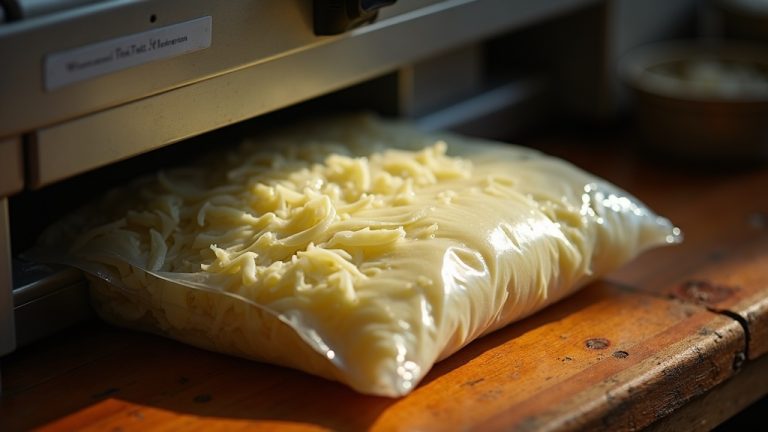
Fermented cabbage specifically delivers strains of Lactobacillus that research has linked to gut microbiome colonisation and to the production of GABA precursors and beneficial metabolites. The fermentation process itself produces lactic acid and short-chain fatty acids as primary outputs, making it a food that directly feeds the gut-brain axis, not just the digestive system.
This is the leverage point. Not a 30-day protocol. A consistent food input that changes the environment the whole system operates in.
The point
Your gut health is not separate from your mental performance, your recovery quality, or your stress resilience. They are expressions of the same underlying system.
The goal is not to optimise any single variable. It is to understand how the system works well enough that the daily decisions, what you eat, how hard you train, how much you sleep, how you manage stress, make sense as parts of a coherent whole.
That’s what this platform is here to explain.
References
1. Breit S, Kupferberg A, Rogler G, Hasler G. Vagus Nerve as Modulator of the Brain-Gut Axis in Psychiatric and Inflammatory Disorders. *Front Psychiatry*. 2018;9:44. [doi:10.3389/fpsyt.2018.00044](https://doi.org/10.3389/fpsyt.2018.00044)
2. Margolis KG, Cryan JF, Mayer EA. The Microbiota-Gut-Brain Axis: From Motility to Mood. *Gastroenterology*. 2021;160(5):1486–1501. [doi:10.1053/j.gastro.2020.10.066](https://doi.org/10.1053/j.gastro.2020.10.066)
3. Radjabzadeh D, Bosch JA, Uitterlinden AG, et al. Gut microbiome-wide association study of depressive symptoms. *Nat Commun*. 2022;13(1):7128. [doi:10.1038/s41467-022-34502-3](https://doi.org/10.1038/s41467-022-34502-3)
4. Liu H, Wang J, He T, et al. Butyrate: A Double-Edged Sword for Health? *Adv Nutr*. 2018;9(1):21–29. [doi:10.1093/advances/nmx009](https://doi.org/10.1093/advances/nmx009)
5. Dalile B, Van Oudenhove L, Vervliet B, Verbeke K. The role of short-chain fatty acids in microbiota-gut-brain communication. *Nat Rev Gastroenterol Hepatol*. 2019;16(8):461–478. [doi:10.1038/s41575-019-0157-3](https://doi.org/10.1038/s41575-019-0157-3)
6. Geng SH, Yang L, Cheng F, et al. Gut Microbiota Are Associated With Psychological Stress-Induced Defections in Intestinal and Blood-Brain Barriers. *Front Microbiol*. 2020;10:3067. [doi:10.3389/fmicb.2019.03067](https://doi.org/10.3389/fmicb.2019.03067)
7. Kulecka M, Frączek B, Mikula M, et al. The composition and richness of the gut microbiota differentiate the top Polish endurance athletes from sedentary controls. *Gut Microbes*. 2020;11(5):1374–1384. [doi:10.1080/19490976.2020.1758009](https://doi.org/10.1080/19490976.2020.1758009)
8. Torquati L, Gajanand T, Cox ER, et al. Effects of exercise intensity on gut microbiome composition and function in people with type 2 diabetes. *Eur J Sport Sci*. 2022;23(4):530–541. [doi:10.1080/17461391.2022.2035436](https://doi.org/10.1080/17461391.2022.2035436)
9. Wastyk HC, Fragiadakis GK, Perelman D, et al. Gut-microbiota-targeted diets modulate human immune status. *Cell*. 2021;184(16):4137–4153.e14. [doi:10.1016/j.cell.2021.06.019](https://doi.org/10.1016/j.cell.2021.06.019)